
Osteomyelitis is a bacterial, or fungal, infection of the bone. that can affect both adults and children. If left untreated, it can lead to bone tissue death over time.
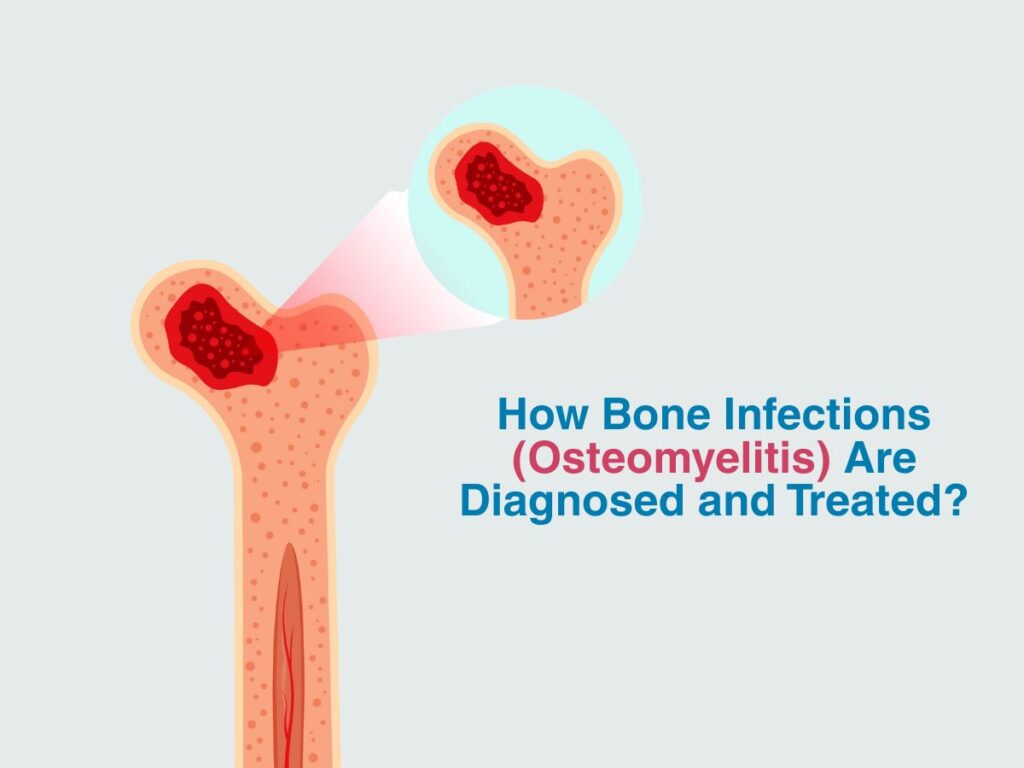
Types of osteomyelitis
There are a few types of osteomyelitis:-
Acute osteomyelitis: it will happens with bone infection after that infection spreads with complete bone. it is most common type.
Chronic osteomyelitis: Bone infections aren’t completely cured after treatment can linger in your body and come back months or years later.
Vertebral osteomyelitis: Osteomyelitis that infects the vertebrae in your spine.
What is a Cause of Osteomyelitis ?
- It can be caused by a variety of microbial agents (most common in staphylococcus aureus) and situations, including:
- An open injury to the bone, such as an open fracture with the bone ends coming out through the skin.
- A minor trauma, which can lead to a blood clot around the bone and then a secondary infection from seeding of bacteria.
- Bacteria in the bloodstream (bacteremia), which is deposited in a focal (localized) area of the bone.
- Certain chronic conditions like diabetes may increase your risk for osteomyelitis.
- Bones are normally resistant to infection, but infection may enter a bone under certain conditions.
- When an infection develops inside the bone, the immune system will try to kill it. Neutrophils, a type of white blood cell, will be sent to the source of the infection to kill the bacteria or fungus.
Symptoms:-
They commonly include:
- Pain, which can be severe, and swelling, redness, and tenderness in the affected area
- Irritability, lethargy, or fatigue
- Fever, chills, and sweating
- Drainage from an open wound near the infection site or through the skin.
- The symptoms of chronic osteomyelitis are not always not obvious, or they could resemble the symptoms of an injury.
- This can make accurate diagnosis more difficult, especially in the hip, pelvis, or spine.
- Additional symptoms that may be associated with this disease include:
- Excessive sweating.
- Chills.
- Lower back pain (if the spine is involved).
- Swelling of the ankles, feet, and legs.
- Changes in gait (walking pattern that is a painful, yielding a limp) or unwillingness to bear weight in children.
Diagnosis:-
They will ask about recent medical history, especially any recent accidents, operations, or infections.
Tests may include:
- Blood tests: High levels of white blood cells usually indicate infection.
- Biopsy: The physician takes a small piece of tissue to test which type of pathogen – bacteria or fungi – is causing bone infection. This helps find a suitable treatment.
- Imaging tests: An x-ray, MRI, or CT scan can reveal any bone damage.
Risk factor and prevention:-
- Patients with a weakened immune system should:
- Have a well-balanced healthy diet and suitable exercise, to boost the immune system
- Avoid smoking, it’s decrease the immune system and contributes to poor circulation
- Practice good hygiene, including regular and proper handwashing.
Patients with poor circulation should:
- Avoid smoking
- Maintain a healthy body weight by following a healthy diet.
- Exercise regularly to improve your circulation.
- Avoid excessive regular alcohol consumption as this raises the risk of hypertension, or high blood pressure, and high cholesterol.
Diagnosis and Tests
Physical exam and some tests.
Blood tests.
MRI.
CT.
Ultrasound.
Bone scan.
Bone marrow biopsy.
Treatment:-
it’s depends on the type of osteomyelitis.
In acute osteomyelitis, infection develops within 2 weeks of an injury, initial infection, The pain can be intense, and the condition can be life-threatening. A course of antibiotics or antifungal medicine is normally effective.
some time side effects from antibiotics include diarrhea, vomiting, and nausea. Sometimes there may be an allergic reaction.
In sub-acute osteomyelitis, infection develops within 1–2 months of an injury, initial infection, or the start of an underlying disease.
In chronic osteomyelitis, infection starts at least 2 months after an injury, initial infection, or the start of an underlying disease.
Drugs:
Antifungals.
NSAIDS.
Needle aspiration .
Surgery: you may need surgery if the bone infection is severe or you have high risk of complication.