
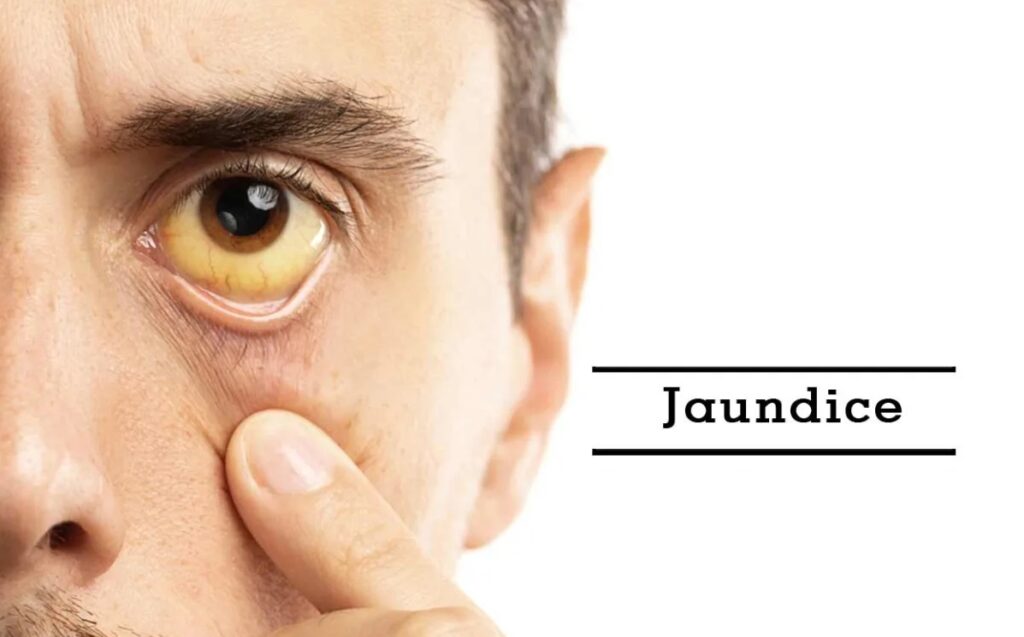
What is Jaundice :- it is a condition where your skin, the whites of your eyes and mucous membranes turn yellow. Many medical conditions can cause jaundice, like hepatitis, gallstones and tumors.
Overview
Jaundice (hyperbilirubinemia) is when your skin, sclera and mucous membranes turn yellow. When red blood cells die, they leave behind bilirubin, a yellow-orange pigment in the blood. The liver filters bilirubin from the bloodstream to be removed in your stool. If too much is in your system or your liver is overloaded, it causes a buildup known as hyperbilirubinemia.
What are the different types of jaundice?
- Pre-Hepatic Jaundice ( Hemolytic Jaundice)
- Hepatic Jaundice ( Hepatocellular Jaundice)
- Post-Hepatic ( Obstructive Jaundice)
- Neonatal Jaundice
What is causes jaundice ?
Hepatic jaundice occurs when the liver becomes less effective at removing bilirubin from the blood. This can occur if you have liver damage or conditions that affect liver function.
- liver cirrhosis, which means that liver tissues are scarred by long-term exposure to infections or toxic substances, such as high levels of alcohol
- viral hepatitis, an inflammation of the liver caused by one of several viruses that can get into your body through infected food, water, blood, stool, or sexual contact
- primary biliary cirrhosis, which happens when bile ducts are damaged and can’t process bile, causing it to build up in your liver and damage liver tissue
- alcoholic hepatitis, in which your liver tissues are scarred by the heavy, long-term drinking of alcohol
- leptospirosis, a bacterial infection that can be spread by infected animals or infected animal urine or feces
- liver cancer, in which cancerous cells develop and multiply within liver tissues
- Blocked bile ducts
- certain medicine
- Blood clots
- Hemolytic anemias
What is Symptoms of Jaundice ?
- loss of appetite
- bloody nose
- skin itching
- weakness
- abnormal weight loss
- swelling of your abdomen or legs
- dark urine or pale stool
- pain in your muscles or joints
- darkening skin
- fever
- feeling sick
How jaundice develops:
- Red blood cell breakdown: Your body regularly breaks down old red blood cells and replaces them with new ones. This breakdown process makes bilirubin.
- Bilirubin processing: Normally, your liver processes bilirubin, making it a part of bile (a bitter, greenish-brown fluid that helps digest food). Your liver then releases the bile into your digestive system.
- Too much bilirubin: Jaundice happens when your liver can’t process all the bilirubin your body makes, or if your liver has a problem releasing bilirubin.
- Yellow color: When there’s too much bilirubin in your blood, it starts to leak into tissues around your blood vessels. This leaking bilirubin makes your skin and the whites of your eyes yellow.
How to Diagnosis of Jaundice
Doctors will most likely start with the person’s history and a physical exam to diagnose jaundice. They may later also order lab tests.
During an examination, they will pay close attention to the abdomen, liver, and skin.
The doctor may often include lab tests to help determine the underlying cause of jaundice.
include:
Bilirubin tests: A high level of unconjugated bilirubin compared to levels of conjugated bilirubin suggest hemolytic jaundice.
Full blood count (FBC) or complete blood count (CBC): This measures levels of red blood cells, white blood cells, and platelets. Hepatitis A, B, and C tests: This tests for a range of liver infection
What is Treatment for jaundice ?
Treatment will depend on the underlying cause of jaundice. we can treat symptomatic ,Jaundice can lead to itching, or pruritus. It may help Trusted Source to have warm baths containing oatmeal and take antihistamines for mild pruritis. A healthcare professional may prescribe medications for those experiencing moderate to severe pruritis, such as cholestyramine or colestipol.
As jaundice may sometimes indicate damage to the liver, a liver transplant may be necessary in some cases, depending on the severity of the injury.
How to Prevent jaundice ?
- Jaundice is related to liver function.
- People can help take care of their liver with several lifestyle changes, such as:
- eating a balanced diet
- exercising regularly
- limiting alcohol consumption
- avoiding toxins from chemicals and other sources, both inhaled and touched
- managing medications carefully